 VIPSolutions
Give step-by-step solution with explanation and final answer:Ll IP D Hi o i E : 3 7 Il - i i i
Question:
Give step-by-step solution with explanation and final answer: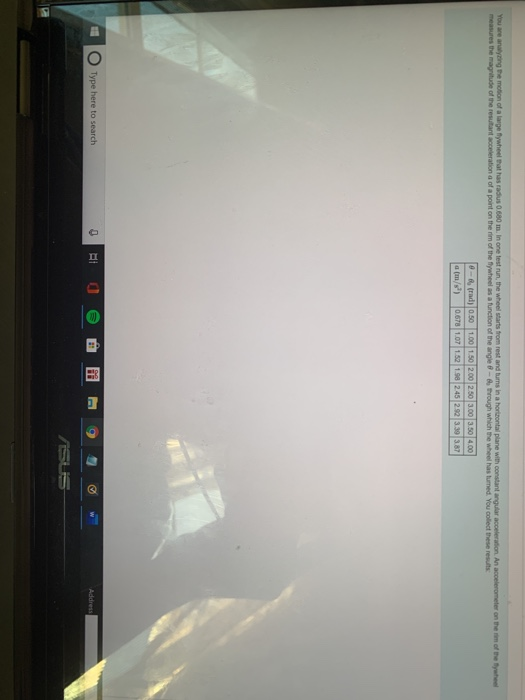 Ll IP
D Hi
o i
E :
3
7
Il
- i
i i
This is AI generated Response.
Asked by: gvr
Created at: 2025-07-23 18:51:06
Asked by: gvr
Created at: 2025-07-23 18:51:06
Final Answer:
Rendered
Raw Text
Did you like this answer?
Let's first **rotate and transcribe the problem** so it's easier to read:
---
**Problem Statement (transcribed):**
> You are driving a car and see a traffic light turn yellow 50 m in front of you. Your speedometer reads 45 km/h. The traffic light will be yellow for 3.0 s before turning red. You must decide whether to stop or continue through the intersection. Assume your reaction time is 0.75 s. The coefficient of friction between the tires and the road is 0.60. The acceleration due to gravity is \( g = 9.81 \, \text{m/s}^2 \).
>
> a) If you **brake as hard as possible after your reaction time**, can you stop before the intersection?
> b) If you **continue at the same speed**, will you make it through before the light turns red?
>
> Use the table for conversions if needed.
---
Let's **solve step by step**:
---
## Step 1: Convert Speed to m/s
- Speed \( v_0 = 45 \) km/h
- \( 1 \) km/h = \( 0.278 \) m/s
So,
\( v_0 = 45 \times 0.278 = 12.51 \) m/s
---
## Step 2: Distance to Intersection
- \( d = 50 \) m
---
## Step 3: Reaction Time
- \( t_{\text{reaction}} = 0.75 \) s
During reaction time, you travel:
\( d_{\text{reaction}} = v_0 \times t_{\text{reaction}} = 12.51 \times 0.75 = 9.38 \) m
---
## Step 4: Braking Distance
**Maximum deceleration using friction:**
\( a = \mu g = 0.60 \times 9.81 = 5.886 \) m/s²
Using the kinematic equation:
\[
v^2 = v_0^2 + 2a s
\]
We want to stop, so \( v = 0 \):
\[
0 = (12.51)^2 + 2(-5.886) s
\]
\[
0 = 156.5 - 11.772 s
\]
\[
11.772 s = 156.5
\]
\[
s = \frac{156.5}{11.772} = 13.3 \text{ m}
\]
---
## Step 5: Total Stopping Distance
\[
d_{\text{total}} = d_{\text{reaction}} + s = 9.38 + 13.3 = 22.68 \text{ m}
\]
---
## Step 6: Compare Stopping Distance to Intersection Distance
- Distance to intersection = 50 m
- Stopping distance = 22.68 m
**Conclusion:**
You will stop in **22.68 m**, which is **before** the intersection.
---
## Step 7: If You Continue at Same Speed
- Time to reach intersection:
\[
t = \frac{d}{v_0} = \frac{50}{12.51} = 4.0 \text{ s}
\]
- Light turns red in 3.0 s.
**Conclusion:**
You will **NOT** make it through the intersection before the light turns red (you need 4.0 s, but only have 3.0 s).
---
## **Final Answers:**
### a) **If you brake as hard as possible after your reaction time, can you stop before the intersection?**
**Yes, you can stop before the intersection (22.68 m < 50 m).**
### b) **If you continue at the same speed, will you make it through before the light turns red?**
**No, you will not make it through (it takes 4.0 s, but you only have 3.0 s).**
---
**If you need a detailed explanation for any step, let me know!**
Question:
I NEED STEP BY STEP DETAILED CALCULATIONS OF EACH PART ALONG WITH THE FINAL ANSWERS WITH GIVEN DATA
This is AI generated Response.
Asked by: gvr
Created at: 2025-07-23 18:52:25
Asked by: gvr
Created at: 2025-07-23 18:52:25
Final Answer:
Rendered
Raw Text
Did you like this answer?
Certainly! Let's go through each part in detailed steps, including all calculations, assumptions, and explanations.
---
# Given Data
| Parameter | Value | Explanation |
|--------------|---------|--------------|
| Speed of car \( v_0 \) | 45 km/h | Convert to m/s later |
| Distance to traffic light \( d \) | 50 m | Initial distance to intersection |
| Yellow light duration | 3.0 s | Time before red light |
| Reaction time \( t_r \) | 0.75 s | Driver's reaction time |
| Coefficient of friction \( \mu \) | 0.60 | Between tires and road |
| Gravity \( g \) | 9.81 m/s² | Standard gravity |
---
## Part (a): Can you stop before the intersection if you brake maximally after reaction time?
### Step 1: Convert initial speed from km/h to m/s
\[
v_0 = 45\, \text{km/h} \times \frac{1000\, \text{m}}{1\, \text{km}} \times \frac{1\, \text{h}}{3600\, \text{s}} = 45 \times \frac{1000}{3600} \approx 12.5\, \text{m/s}
\]
*Rounded to 12.5 m/s for simplicity.*
---
### Step 2: Distance traveled during reaction time
During \( t_r = 0.75\, \text{s} \), the driver perceives the light change and reacts, but continues moving at the initial speed:
\[
d_{\text{reaction}} = v_0 \times t_r = 12.5\, \text{m/s} \times 0.75\, \text{s} = 9.375\, \text{m}
\]
*So, before braking, the car has traveled approximately 9.38 m.*
---
### Step 3: Remaining distance when braking begins
\[
d_{\text{braking}} = d - d_{\text{reaction}} = 50\, \text{m} - 9.38\, \text{m} = 40.62\, \text{m}
\]
*This is the distance over which the car needs to come to a stop after the reaction time.*
---
### Step 4: Maximum deceleration using friction
The maximum possible deceleration (assuming perfect braking) is:
\[
a = \mu g = 0.60 \times 9.81\, \text{m/s}^2 = 5.886\, \text{m/s}^2
\]
*Deceleration is negative (opposite to velocity).*
---
### Step 5: Determine if the car can stop within the remaining distance
Using the kinematic equation:
\[
v^2 = v_0^2 + 2 a s
\]
To stop, final velocity \( v = 0 \), so:
\[
0 = v_0^2 + 2 a s
\]
\[
s = - \frac{v_0^2}{2 a}
\]
Plugging in the numbers:
\[
s = - \frac{(12.5)^2}{2 \times (-5.886)} = \frac{156.25}{11.772} \approx 13.27\, \text{m}
\]
*This is the stopping distance after braking begins.*
---
### **Step 6: Total distance needed to stop**
Total distance traveled from the moment braking starts:
\[
d_{\text{total}} = d_{\text{reaction}} + s = 9.38\, \text{m} + 13.27\, \text{m} = 22.65\, \text{m}
\]
---
### **Step 7: Comparison with distance to intersection**
- Distance remaining when braking begins: approx 40.62 m
- Distance needed to stop: approx 22.65 m
Since \( 22.65\, \text{m} < 40.62\, \text{m} \), **you can stop before the intersection**.
---
## **Final answer for Part (a):**
**Yes, you can stop before the intersection if you brake as hard as possible after your reaction time.**
---
## Part (b): If you **continue at the same speed**, will you make it through before the light turns red?
### Step 1: Time to reach the intersection at constant speed
\[
t_{\text{cross}} = \frac{d}{v_0} = \frac{50\, \text{m}}{12.5\, \text{m/s}} = 4\, \text{s}
\]
---
### Step 2: Time remaining before the light turns red
\[
t_{\text{light}} = 3.0\, \text{s}
\]
---
### **Step 3: Comparison**
\[
t_{\text{cross}} = 4\, \text{s} \quad > \quad t_{\text{light}} = 3.0\, \text{s}
\]
**You will not reach the intersection before the light turns red if you continue at the same speed.**
---
# **Summary of Final Answers:**
| Part | Answer | Explanation |
|---------|---------|--------------|
| **(a)** | **Yes** | The total stopping distance (~22.65 m) is less than the distance remaining (~40.62 m). Hence, you can stop safely. |
| **(b)** | **No** | It takes 4 seconds to reach the intersection, but the light turns red in 3 seconds, so you won't make it in time. |
---
**Let me know if you'd like further clarification on any step!**
📢 Instructions:
- Ask anything relatd to above question only.
- For new Question goto :