 VIPSolutions
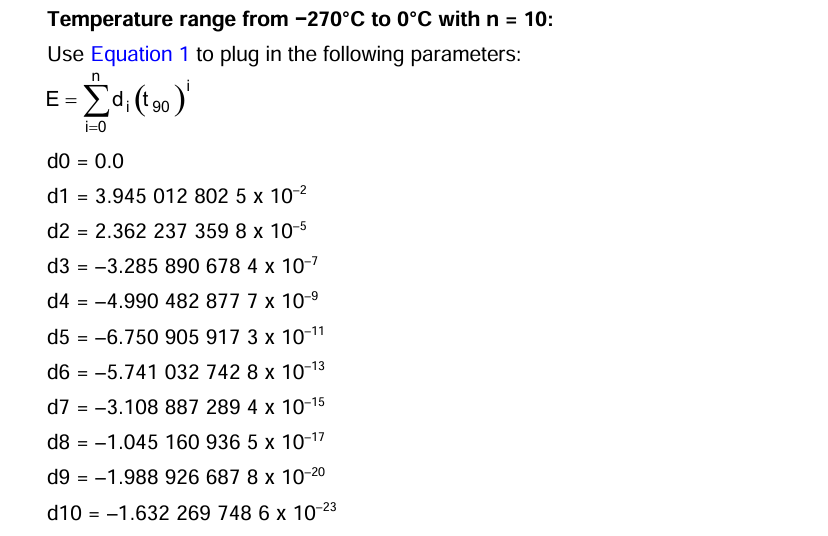
Give step-by-step solution with explanation and final answer:26. You are using a spline as a polynomial function to approximate the output curve for a type K thermocouple 5 points. between -270°C and 0°C. Refer to the online article “Optimized Sensor Linearization for Thermocouple’, by Texas Instruments Inc. for details on how to do this. What is the absolute value of the percentage error at -260°C using the spline curve relative to reading the voltages directly read off the ITS-90 type K thermocouple table shown in the screen shot below? 175-90 Table for type K thermocouple °c ] -1 -2 -3 -4 -5 -6 -7 -8 -9 -10 Thermoelectric Voltage in mV -270 -6.458 260 -6.441 -6.444 6.446 -6.448 -6.450 -6.452 -6.453 -6.455 -6.456 6.457 -6.458 -250 -6.404 -6.408 -6.413 -6.417 -6.421 -6.425 -6.429 -6.432 -6.435 -6.438 -6.441 -240 -6.344 -6.351 -6.358 -6.364 -6.370 -6.377 -6.382 -6.388 -6.393 -6.399 -6.404 -230 -6.262 -6.271 -6.280 -6.289 -6.297 -6.306 -6.314 -6.322 -6.329 -6.337 -6.344 220 -6.158 -6.170 -6.181 -6.192 -6.202 -6.213 -6.223 -6.233 -6.243 -6.252 -6.262 -210 -6.035 -6.048 -6.061 -6.074 -6.087 -6.099 -6.111 -6.123 -6.135 -6.147 -6.158 -200 -5.891 -5.907 -5.922 -5.936 -5.951 -5.965 -5.980 -5.994 -6.007 -6.021 -6.035 -190 -5.730 -5.747 -5.763 -5.780 -5.797 -5.813 -5.829 -5.845 -5.861 -5.876 -5.801 -180 -5.550 -5.569 -5.588 -5.606 -5.624 -5.642 -5.660 -5.678 -5.695 -5.713 -5.730 170 -5.354 -5.374 -5.395 -5.415 -5.435 -5.454 -5.474 -5.493 -5.512 -5.531 -5.550 -160 -5.141 -5.163 -5.185 -5.207 -5.228 -5.250 -5.271 -5.292 -5.313 -5.333 -5.354 -150 -4.913 -4.936 -4.960 -4.983 -5.006 -5.029 -5.052 -5.074 -5.097 -5.119 -5.141 140 -4.669 -4.694 -4.719 -4.744 -4.768 -4.793 -4.817 -4.841 -4.865 -4.889 -4.913 130 -4.411 -4.437 -4.463 -4.490 -4.516 -4.542 -4.567 -4.593 -4.618 -4.644 -4.669 -120 -4.138 -4.166 -4.194 -4.221 -4.249 -4.276 -4.303 -4.330 -4.357 -4.384 -4.411 -110 -3.852 -3.882 -3.911 -3.939 -3.968 -3.997 -4.025 -4.054 -4.082 -4.110 -4.138 -100 -3.554 -3.584 -3.614 -3.645 -3.675 -3.705 -3.734 -3.764 -3.794 -3.823 -3.852 (Type in four-decimal number, where this number represents a percentage. e.g. type 0.4521 if you mean 0.4521%). 0.0430 Temperature range from -270°C to 0°C with n = 10: Use Equation 1 to plug in the following parameters: n E- 2 dite) i=0 do =0.0 d1 = 3.945012 802 5 x 10° d2 = 2.362 237 359 8 x 10° d3 =-3.285 890678 4 x 10⁷ d4 = -4.990 482 877 7 x 10° d5 =-6.750 905 917 3x 107" d6 = -5.741 032 7428 x 107" d7 =-3.108 887 289 4 x 10⁷° d8 =-1.045 160 936 5 x 10" d9 = -1.988 926 687 8 x 10²° d10 = 1.632 269 748 6 x 10%
Question:
Give step-by-step solution with explanation and final answer: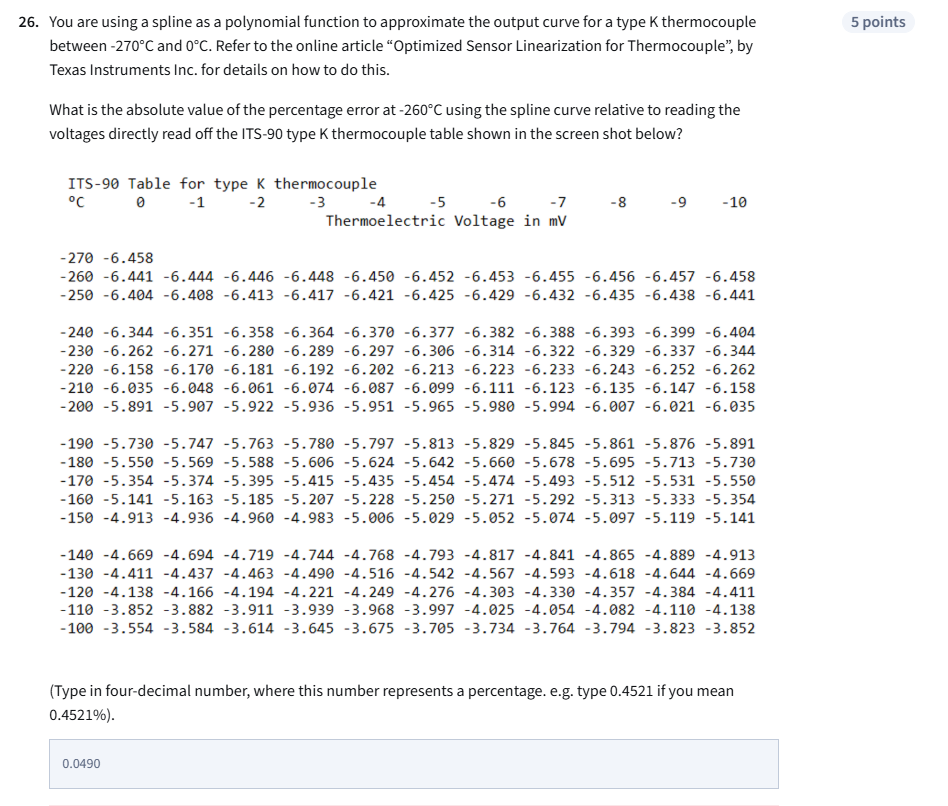
 26. You are using a spline as a polynomial function to approximate the output curve for a type K thermocouple 5 points.
between -270°C and 0°C. Refer to the online article “Optimized Sensor Linearization for Thermocouple’, by
Texas Instruments Inc. for details on how to do this.
What is the absolute value of the percentage error at -260°C using the spline curve relative to reading the
voltages directly read off the ITS-90 type K thermocouple table shown in the screen shot below?
175-90 Table for type K thermocouple
°c ] -1 -2 -3 -4 -5 -6 -7 -8 -9 -10
Thermoelectric Voltage in mV
-270 -6.458
260 -6.441 -6.444 6.446 -6.448 -6.450 -6.452 -6.453 -6.455 -6.456 6.457 -6.458
-250 -6.404 -6.408 -6.413 -6.417 -6.421 -6.425 -6.429 -6.432 -6.435 -6.438 -6.441
-240 -6.344 -6.351 -6.358 -6.364 -6.370 -6.377 -6.382 -6.388 -6.393 -6.399 -6.404
-230 -6.262 -6.271 -6.280 -6.289 -6.297 -6.306 -6.314 -6.322 -6.329 -6.337 -6.344
220 -6.158 -6.170 -6.181 -6.192 -6.202 -6.213 -6.223 -6.233 -6.243 -6.252 -6.262
-210 -6.035 -6.048 -6.061 -6.074 -6.087 -6.099 -6.111 -6.123 -6.135 -6.147 -6.158
-200 -5.891 -5.907 -5.922 -5.936 -5.951 -5.965 -5.980 -5.994 -6.007 -6.021 -6.035
-190 -5.730 -5.747 -5.763 -5.780 -5.797 -5.813 -5.829 -5.845 -5.861 -5.876 -5.801
-180 -5.550 -5.569 -5.588 -5.606 -5.624 -5.642 -5.660 -5.678 -5.695 -5.713 -5.730
170 -5.354 -5.374 -5.395 -5.415 -5.435 -5.454 -5.474 -5.493 -5.512 -5.531 -5.550
-160 -5.141 -5.163 -5.185 -5.207 -5.228 -5.250 -5.271 -5.292 -5.313 -5.333 -5.354
-150 -4.913 -4.936 -4.960 -4.983 -5.006 -5.029 -5.052 -5.074 -5.097 -5.119 -5.141
140 -4.669 -4.694 -4.719 -4.744 -4.768 -4.793 -4.817 -4.841 -4.865 -4.889 -4.913
130 -4.411 -4.437 -4.463 -4.490 -4.516 -4.542 -4.567 -4.593 -4.618 -4.644 -4.669
-120 -4.138 -4.166 -4.194 -4.221 -4.249 -4.276 -4.303 -4.330 -4.357 -4.384 -4.411
-110 -3.852 -3.882 -3.911 -3.939 -3.968 -3.997 -4.025 -4.054 -4.082 -4.110 -4.138
-100 -3.554 -3.584 -3.614 -3.645 -3.675 -3.705 -3.734 -3.764 -3.794 -3.823 -3.852
(Type in four-decimal number, where this number represents a percentage. e.g. type 0.4521 if you mean
0.4521%).
0.0430
Temperature range from -270°C to 0°C with n = 10:
Use Equation 1 to plug in the following parameters:
n
E- 2 dite)
i=0
do =0.0
d1 = 3.945012 802 5 x 10°
d2 = 2.362 237 359 8 x 10°
d3 =-3.285 890678 4 x 10⁷
d4 = -4.990 482 877 7 x 10°
d5 =-6.750 905 917 3x 107"
d6 = -5.741 032 7428 x 107"
d7 =-3.108 887 289 4 x 10⁷°
d8 =-1.045 160 936 5 x 10"
d9 = -1.988 926 687 8 x 10²°
d10 = 1.632 269 748 6 x 10%
Asked by: Aman
Created at: 2025-09-26 09:32:31
Final Answer:
📢 Instructions:
- Ask anything relatd to above question only.
- For new Question goto :