 VIPSolutions
give answer in 2 step with explanation at the end of each step and final answer at the end:Case 7-1 Valuation of Abnormal Earnings Beginning book value of equity Forecasted earnings (Beg. BV of Equity x Forecasted ROCE %) - Dividends (40% x Forecasted earnings) = End of year BV of equity Forecasted earnings normal earnings (beginning BV of equity x coast of capital %) = abnormal earnings X PV factor PV of abnormal earnings Initial book value of equity PV of abnormal earnings for 10 years = estimated value of equity Divide by # of shares = estimated share price Note: set this up on an excel spreadsheet. You will be doing computations 1Case 7-1 Valuation of Abnormal Earnings Beginning book value of equity Forecasted earnings (Beg. BV of Equity x Forecasted ROCE %) - Dividends (40% x Forecasted earnings) = End of year BV of equity Forecasted earnings normal earnings (beginning BV of equity x coast of capital %) = abnormal earnings X PV factor PV of abnormal earnings Initial book value of equity PV of abnormal earnings for 10 years = estimated value of equity Divide by # of shares = estimated share price Note: set this up on an excel spreadsheet. You will be doing computations 1
Question:
give answer in 2 step with explanation at the end of each step and final answer at the end: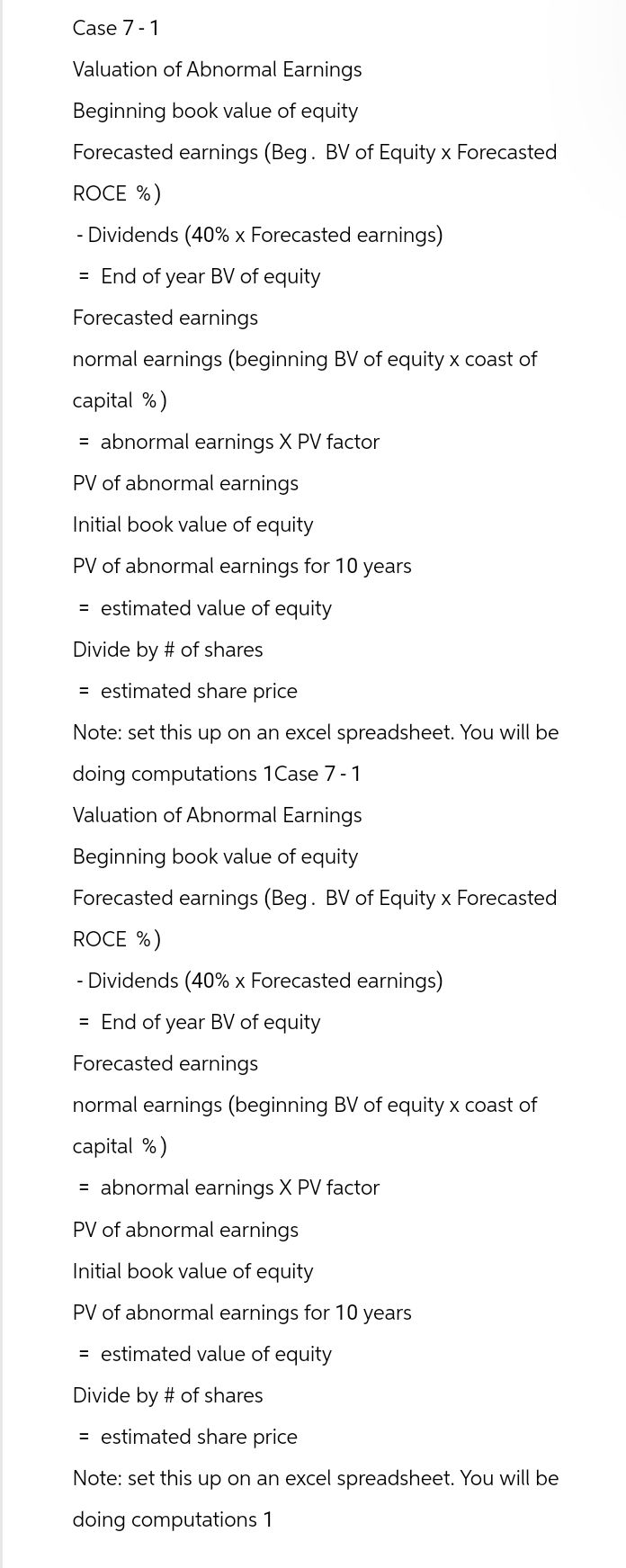 Case 7-1
Valuation of Abnormal Earnings
Beginning book value of equity
Forecasted earnings (Beg. BV of Equity x Forecasted
ROCE %)
- Dividends (40% x Forecasted earnings)
= End of year BV of equity
Forecasted earnings
normal earnings (beginning BV of equity x coast of
capital %)
= abnormal earnings X PV factor
PV of abnormal earnings
Initial book value of equity
PV of abnormal earnings for 10 years
= estimated value of equity
Divide by # of shares
= estimated share price
Note: set this up on an excel spreadsheet. You will be
doing computations 1Case 7-1
Valuation of Abnormal Earnings
Beginning book value of equity
Forecasted earnings (Beg. BV of Equity x Forecasted
ROCE %)
- Dividends (40% x Forecasted earnings)
= End of year BV of equity
Forecasted earnings
normal earnings (beginning BV of equity x coast of
capital %)
= abnormal earnings X PV factor
PV of abnormal earnings
Initial book value of equity
PV of abnormal earnings for 10 years
= estimated value of equity
Divide by # of shares
= estimated share price
Note: set this up on an excel spreadsheet. You will be
doing computations 1
Asked by: Rahul
Created at: 2025-11-17 07:45:40
Final Answer:
📢 Instructions:
- Ask anything relatd to above question only.
- For new Question goto :