VIPSolutions logo ✨ VIPSolutions

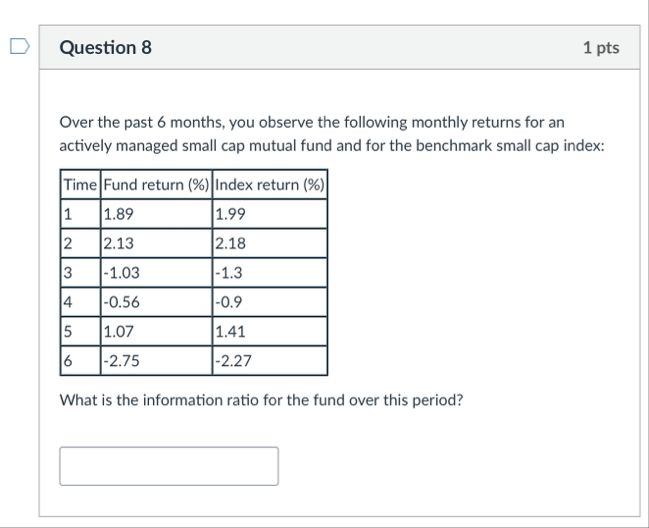
give answer in 2 step with explanation at the end of each step and final answer at the end: 4. Copper Oxide Layers The common building blocks for most high temperature (high Tc) su perconductors are copper oxide layers as shown in the figure below. Assume the distance between the copper atoms (dark circles) is a. For simplicity assume that in the third dimension these CuO2 layers are simply stacked ( copper above copper, oxygen above oxygen) with spacing c, and there are no other atoms in the crystal structure. In first approximation, the layers have four -fold symmetry; the crystal is tetragonal. 0.0.0.0 0.0. 0.0. (i) tetragonal (ii) orthorhombic (a) Sketch the Bravais lattice and indicate a possible set of primitive lattice vectors. What is the unit cell, and what is the basis? (b) In La2CuO4 one discovers at closer inspection, that the CuO2 lattice is actually not flat; but that the oxygen atoms are moved out of the plane ( up or down) in an alternating fashion (see the figure above where + means up and means down. What is the primitive cell and lattice spacing for this crystal ? What is the reciprocal lattice ?[0 Question 8 1pts Over the past 6 months, you observe the following monthly returns for an actively managed small cap mutual fund and for the benchmark small cap index: [Time]Fund return (%)]index return (%) FO CE CT oe Jor] FO EER EEA What is the information ratio for the fund over this period?
Question:

give answer in 2 step with explanation at the end of each step and final answer at the end: 4. Copper Oxide Layers The common building blocks for most high temperature (high Tc) su perconductors are copper oxide layers as shown in the figure below. Assume the distance between the copper atoms (dark circles) is a. For simplicity assume that in the third dimension these CuO2 layers are simply stacked ( copper above copper, oxygen above oxygen) with spacing c, and there are no other atoms in the crystal structure. In first approximation, the layers have four -fold symmetry; the crystal is tetragonal. 0.0.0.0 0.0. 0.0. (i) tetragonal (ii) orthorhombic (a) Sketch the Bravais lattice and indicate a possible set of primitive lattice vectors. What is the unit cell, and what is the basis? (b) In La2CuO4 one discovers at closer inspection, that the CuO2 lattice is actually not flat; but that the oxygen atoms are moved out of the plane ( up or down) in an alternating fashion (see the figure above where + means up and means down. What is the primitive cell and lattice spacing for this crystal ? What is the reciprocal lattice ?Uploaded Image[0 Question 8 1pts Over the past 6 months, you observe the following monthly returns for an actively managed small cap mutual fund and for the benchmark small cap index: [Time]Fund return (%)]index return (%) FO CE CT oe Jor] FO EER EEA What is the information ratio for the fund over this period?

This is AI generated Response.
Asked by: Rahulkumar
Created at: 2025-08-28 06:03:29

Final Answer:

Rendered Raw Text
Did you like this answer?
Let's solve the problem step by step: --- ### **Step 1: Calculate the Active Return (Difference Each Month and Mean)** The **information ratio** is defined as: \[ \text{Information Ratio} = \frac{\text{Mean (Active Return)}}{\text{Standard Deviation (Active Return)}} \] **Active Return = Fund Return - Index Return** (for each period): | Time | Fund return (%) | Index return (%) | Active return (%) | |------|----------------|------------------|-------------------| | 1 | 1.89 | 1.99 | 1.89 - 1.99 = **-0.10** | | 2 | 2.13 | 2.18 | 2.13 - 2.18 = **-0.05** | | 3 | -1.03 | -1.30 | -1.03 - (-1.30) = **0.27** | | 4 | -0.56 | -0.90 | -0.56 - (-0.90) = **0.34** | | 5 | 1.07 | 1.41 | 1.07 - 1.41 = **-0.34** | | 6 | -2.75 | -2.27 | -2.75 - (-2.27) = **-0.48** | Now, calculate the **mean active return**: \[ \text{Mean Active Return} = \frac{-0.10 + (-0.05) + 0.27 + 0.34 + (-0.34) + (-0.48)}{6} \] \[ = \frac{-0.10 - 0.05 + 0.27 + 0.34 - 0.34 - 0.48}{6} \] \[ = \frac{-0.10 - 0.05 - 0.34 - 0.48 + 0.27 + 0.34}{6} \] \[ = \frac{-0.10 - 0.05 - 0.34 - 0.48}{6} + \frac{0.27 + 0.34}{6} \] \[ = \frac{-0.97 + 0.61}{6} \] \[ = \frac{-0.36}{6} = -0.06 \] **Explanation:** We calculated the difference each month and found the mean of those differences, which is the average active return. --- ### **Step 2: Calculate Standard Deviation of Active Return and Information Ratio** First, list the active returns: -0.10, -0.05, 0.27, 0.34, -0.34, -0.48 Their mean is **-0.06** (from above). Now, calculate the standard deviation (SD): \[ SD = \sqrt{\frac{1}{N} \sum_{i=1}^{N} (x_i - \bar{x})^2} \] Where \( x_i \) are active returns, \( \bar{x} \) is the mean (-0.06), and \( N = 6 \): - (-0.10 - (-0.06)) = -0.04 → (-0.04)^2 = 0.0016 - (-0.05 - (-0.06)) = 0.01 → (0.01)^2 = 0.0001 - (0.27 - (-0.06)) = 0.33 → (0.33)^2 = 0.1089 - (0.34 - (-0.06)) = 0.40 → (0.40)^2 = 0.16 - (-0.34 - (-0.06)) = -0.28 → (-0.28)^2 = 0.0784 - (-0.48 - (-0.06)) = -0.42 → (-0.42)^2 = 0.1764 Sum: 0.0016 + 0.0001 + 0.1089 + 0.16 + 0.0784 + 0.1764 = **0.5254** Variance: 0.5254 / 6 = **0.08757** Standard deviation: \(\sqrt{0.08757} = 0.296\) Now, **Information Ratio**: \[ \text{Information Ratio} = \frac{-0.06}{0.296} = -0.203 \] **Explanation:** We calculated the standard deviation of the active returns and then divided the mean active return by this standard deviation to get the information ratio. --- ### **Final Answer:** **The information ratio for the fund over this period is approximately \(\boxed{-0.20}\) (rounded to two decimal places).**

📢 Instructions:

  • Ask anything relatd to above question only.
  • For new Question goto :

Study Help, Fast Answers

VIPSolutions focuses on clear, step‑by‑step explanations so you can learn quickly. Whether you need an AI‑generated walkthrough or a short hint to get unstuck, each solution is organized for fast reading and easy review later.

Search similar questions, compare approaches, and bookmark the best answers for revision. Our goal is simple: quick, reliable study help that feels natural—not noisy.