 VIPSolutions
Act like a helpful tutor and exlain me :Fu Hd ig
Question:
Act like a helpful tutor and exlain me :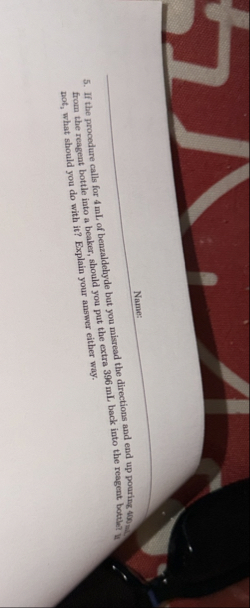 Fu
Hd
ig
This is AI generated Response.
Asked by: Alok Kumar
Created at: 2026-01-31 09:39:23
Asked by: Alok Kumar
Created at: 2026-01-31 09:39:23
Final Answer:
Rendered
Raw Text
Did you like this answer?
Sure! Here’s what the question says and how to think about it:
---
### Question Transcription
> 5. If the procedure calls for a tail of cheesesticks but you misread the directions and end up preparing 50% more cheese, but then accidentally put the extra 50% back into the original batch, what should you do with it? Explain your answer either way.
---
### Step-by-Step Explanation
#### **1. Understanding the Scenario**
- The recipe asks for a specific amount of "cheesesticks."
- You accidentally make **50% more** cheese than needed (so, if you needed 100g, you made 150g).
- You put the **extra 50%** (the extra cheese) **back into the original batch** (presumably, a larger batch of cheese that you were drawing from).
#### **2. The Core Question**
- The focus is: **What should you do with the extra cheese that you accidentally made and put back?**
- Should you keep or discard it? Why?
#### **3. Key Points to Consider**
- **Contamination:** Once cheese (or any food product) is taken out and used for preparation, it may be exposed to air, surfaces, utensils, or even your hands. This can introduce bacteria or other contaminants.
- **Food Safety:** Putting food that’s been exposed back into the original batch could risk contaminating all of it.
- **Best Practice:** In commercial kitchens and safe food handling, you should **never return used ingredients** to the main batch.
#### **4. What Should You Do?**
**You should NOT return the extra cheese to the original batch.**
- If you have already done so, you may need to discard the original batch to avoid health risks.
- If you haven’t put it back yet, keep the extra cheese aside or discard it, but don’t mix it back in.
#### **5. Explanation**
- **Why not?** Food safety protocols exist to prevent the spread of bacteria and keep food safe for consumption.
- **What if you already did?** If the extra cheese was exposed to possible contaminants, the safest thing is to **discard the entire batch** to protect consumers.
---
## **Summary Table**
| Step | Action | Reason |
|------|--------|--------|
| 1 | Accidentally make 50% extra cheese | Misreading directions |
| 2 | Put extra back in original batch | Mistake |
| 3 | Decide what to do | Food safety issue |
| 4 | **Best Practice:** Do NOT put extra back | Prevent contamination |
| 5 | If already mixed, discard entire batch | Safety first |
---
## **Short Answer Example**
If you accidentally make 50% more cheese and put the extra back into the original batch, you should **not use that batch** anymore. This is because the cheese may have been contaminated during preparation, and returning it to the main batch can spread bacteria or other harmful substances. In food safety, it's always best to avoid returning used or exposed ingredients to the original stock to protect everyone who eats the food.
---
Let me know if you need further clarification!
📢 Instructions:
- Ask anything relatd to above question only.
- For new Question goto :