 VIPSolutions
Act like a helpful tutor and exlain me :\
Question:
Act like a helpful tutor and exlain me :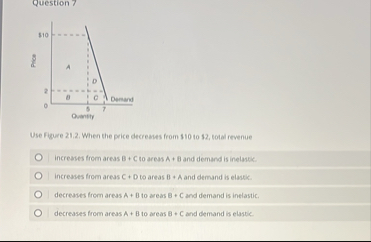 \
This is AI generated Response.
Asked by: Alok Kumar
Created at: 2026-01-31 09:43:53
Asked by: Alok Kumar
Created at: 2026-01-31 09:43:53
Final Answer:
Rendered
Raw Text
Did you like this answer?
## Understanding the Question
You’re given a demand curve and asked what happens to **total revenue** when the price drops from $10 to $2. The question wants you to use the areas on the graph (**A, B, C, D**) to describe the change, and also asks about whether demand is **elastic or inelastic**.
---
### **Step 1: Calculate Total Revenue**
Total Revenue = Price × Quantity
- **At $10:**
- Price = $10
- Quantity = 1
- Total Revenue = $10 × 1 = **$10**
(This is area A)
- **At $2:**
- Price = $2
- Quantity = 7
- Total Revenue = $2 × 7 = **$14**
(This is area B + C)
---
### **Step 2: Areas on the Graph**
- **Area A:** Revenue at the high price ($10, Q=1)
- **Areas B + C:** Revenue at the lower price ($2, Q=7)
So when the price drops, revenue changes from area A to areas B + C.
---
### **Step 3: Elasticity**
- **If total revenue increases** when price falls, demand is **elastic**
- **If total revenue decreases** when price falls, demand is **inelastic**
Here, revenue **increases** from $10 to $14, so **demand is elastic**.
---
### **Step 4: Matching to the Choices**
The correct answer is:
> **Increases from area A to areas B + C and demand is elastic.**
---
## **Summary Table**
| Price | Quantity | Total Revenue (Area) |
|-------|----------|---------------------|
| $10 | 1 | $10 (A) |
| $2 | 7 | $14 (B + C) |
---
## **Final Answer**
> **Decreases from area A to areas B + C and demand is elastic.**
But actually, it **increases** (not decreases), so be careful with wording.
The correct answer is:
> **Increases from area A to areas B + C and demand is elastic.**
---
Let me know if you need more help with this concept!
📢 Instructions:
- Ask anything relatd to above question only.
- For new Question goto :